
Home › Biological sample › Autoimmune & Inflammatory Diseases
Autoimmune & Inflammatory Disease Biospecimens
for Research & Development
Autoimmune & Inflammatory Disease Biospecimens for Precision Medicine
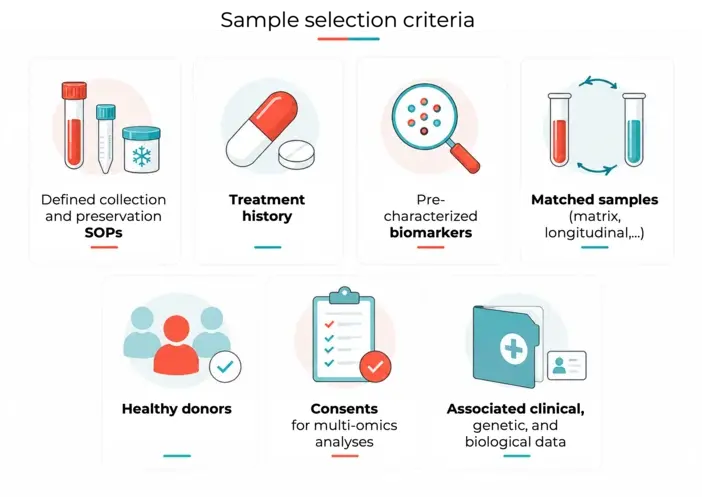
In autoimmune and inflammatory disease research, identifying clinical sites able to provide highly characterized biological samples that meet precise scientific and medical criteria can be challenging.
To address this need, Labtoo supports R&D organizations with a fully tailored biospecimen sourcing solution.
Based on a detailed specification document incorporating your biological, scientific, and clinical inclusion and exclusion criteria, Labtoo identifies the clinical site or network best suited to supply the required human biospecimens and associated clinical data.
This customized approach saves valuable time, provides access to fit-for-purpose, well-characterized samples, and helps accelerate your preclinical and translational research programs.
Sample Types for Autoimmune Disease Research
|
Examples of Autoimmune & Inflammatory Diseases
|
Type of Samples Collected
|
Systemic Lupus Erythematosus (SLE)
Multiple Sclerosis (MS)Rheumatoid Arthritis (RA)Ankylosing Spondylitis (AS)Inflammatory Bowel Disease (IBD)PsoriasisInflammatory Myopathies |
Blood and Blood Derivatives
PBMCs, Serum & Plasma Joint Biopsies
Skin Biopsies Intestinal Biopsies Muscle Biopsies Synovial Fluid
Synovial Tissue Cerebrospinal Fluid (CSF) Stool Samples |
Associated Clinical Data for Autoimmune & Inflammatory Disease Biospecimens
-
Age
-
Sex
- Antibody results
- Treatments received
- Biomarker status
-
Diagnostic guidelines
-
Comorbidities
-
HIV/HBV/HCV status
-
Biochemistry results
-
Mutations
- Other Data (upon request)
One Partner. Multiple Specialized Clinical Sites.
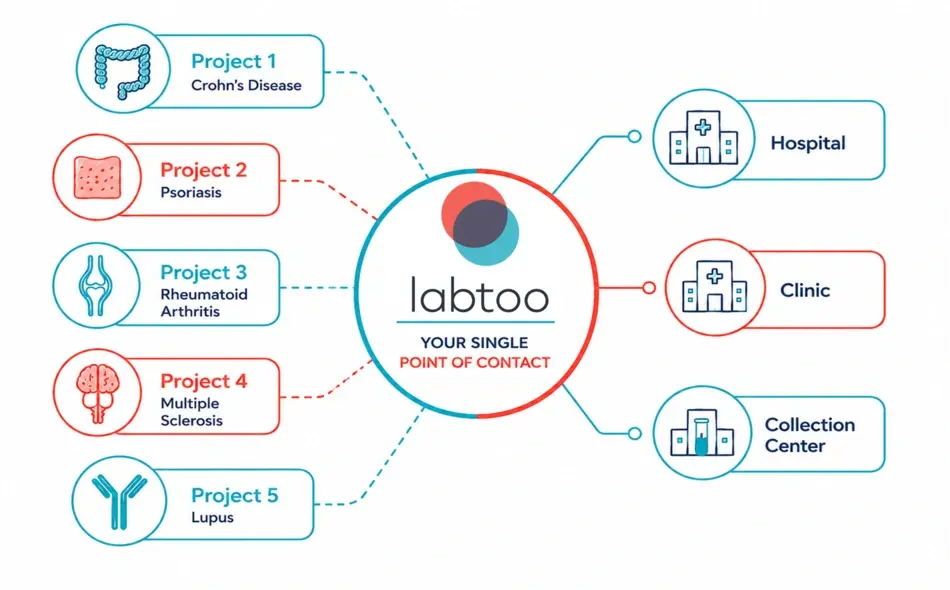
In immunology research and development, organizations frequently run multiple programs in parallel across indications such as systemic lupus erythematosus, rheumatoid arthritis, multiple sclerosis, inflammatory bowel disease (IBD), and myositis. However, healthcare institutions are typically specialized in specific diseases or organ systems, making it challenging to access a diverse range of biological sample collections.
Ethical, regulatory, and operational requirements also vary from one clinical site to another, not only between countries, but even among institutions within the same region or depending on the type of collection involved.
For scientific, legal, and operational teams, managing this diversity of contacts, procedures, and contractual requirements represents a significant investment of time and resources.
As your single point of contact, Labtoo identifies the clinical sites best suited to your needs and coordinates the transfer of biological materials. This allows you to spend less time sourcing samples and onboarding new vendors, and more time advancing your scientific programs.
Biological samples tailored to your research applications
Labtoo gives you access to biological samples selected according to your specific requirements.
Through our targeted search for clinical partners, you can address a wide range of needs for your preclinical and translational research projects, including:
-
Patient stratification strategies to advance precision medicine approaches in immunology
-
Identification and validation of disease-specific diagnostic and prognostic biomarkers
-
Validation of novel therapeutic targets for autoimmune diseases and chronic inflammatory disorders
-
Development of innovative research approaches based on New Approach Methodologies (NAMs), including advanced in vitro models, organoids, organ-on-chip technologies, multi-omics profiling, and in silico approaches
-
Generation of high-quality datasets to support artificial intelligence and machine learning models applied to immuno-inflammatory research
-
Development and validation of in vitro diagnostic (IVD) solutions dedicated to immune-mediated diseases

Looking for well-characterized patient samples for autoimmune disease research?